

Bitcoin was released in 2009 by an unknown creator under the alias Satoshi Nakamoto. The idea was to create a decentralized form of digital money that operated without banks or intermediaries. At its core was the blockchain, a public ledger that permanently records every transaction. Unlike traditional banking systems, the blockchain is not controlled by a single institution but is instead maintained by a global network of computers. This made Bitcoin attractive to people who wanted money that could move freely across borders and operate outside the control of governments and banks.
The Rise of Bitcoin on the Darknet
Not long after Bitcoin’s release, darknet marketplaces began experimenting with it as a method of payment. Before Bitcoin, transactions on these markets relied on less efficient systems such as wire transfers or prepaid cards, which were slow, clumsy, and easier to trace. Bitcoin’s digital and decentralized nature solved many of these problems. It allowed instant transactions across the world, was not issued by a government, and seemed anonymous. This combination made it the perfect currency for darknet marketplaces such as Silk Road, which launched in 2011.
During these years, Bitcoin quickly became the backbone of darknet commerce. Everything from drugs to digital goods could be exchanged using Bitcoin, and the perception of anonymity gave users confidence. Silk Road in particular demonstrated how effective Bitcoin could be in this setting, and its success inspired dozens of copycat markets. At the time, few people outside the cryptography and cybercrime worlds had the tools to analyze Bitcoin’s blockchain, so users often felt shielded from scrutiny.
Bitcoin’s Traceable Nature
Over time, however, the weaknesses of Bitcoin’s design became clear. While transactions are not directly tied to names, they are permanently recorded on the blockchain in full public view. Each coin carries its history, and once an address can be linked to an individual, the entire flow of funds can be traced backward and forward. What was first seen as anonymity turned out to be pseudonymity.
The introduction of blockchain analysis tools allowed companies and investigators to cluster addresses, map transaction patterns, and deanonymize large portions of Bitcoin activity. This shift marked a turning point for darknet users. What once appeared to be private could suddenly be traced, and coins linked to darknet markets became dangerous to hold or spend openly. The public and permanent nature of Bitcoin’s ledger had transformed from a feature into a risk.
Regulation and the End of Anonymity
The situation was further complicated by government regulation. As Bitcoin gained mainstream attention, exchanges were brought under strict compliance rules. Almost everywhere in the world, users now have to pass Know Your Customer and Anti-Money Laundering checks when buying or selling Bitcoin. This process requires handing over identity documents such as passports, driver’s licenses, and proof of address. Once these checks are complete, the link between an individual and their Bitcoin addresses is established.
Because the blockchain records everything, coins purchased through regulated exchanges are permanently tied to the buyer’s identity. Any future movement of those coins can be tracked, making it possible to see where they are spent, stored, or transferred. For darknet users, this meant that Bitcoin had become far less private than originally believed, and any slip in operational security could expose years of past transactions.
The Shift Toward Privacy Coins
As the risks of Bitcoin became better understood, darknet markets began to look for alternatives. The answer came in the form of privacy-focused cryptocurrencies such as Monero. Unlike Bitcoin, Monero’s blockchain does not reveal transaction details to the public. Instead, it uses advanced cryptographic methods to hide the sender, receiver, and amount of every transfer. This design makes Monero far more resistant to blockchain analysis, and it has quickly become the currency of choice for many darknet platforms.
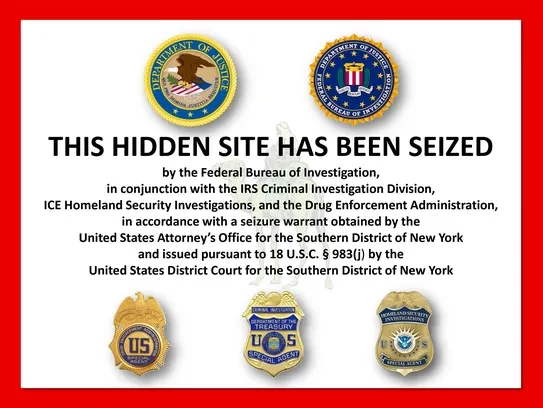
By the mid-2010s, markets increasingly offered Monero alongside Bitcoin, and in some cases switched to Monero exclusively. The trend reflected a growing consensus: Bitcoin was simply too exposed to serve as a reliable tool for private transactions. Although Bitcoin is still accepted on some markets, its role has diminished significantly. Monero now dominates in spaces where privacy is valued, while Bitcoin remains more popular in regulated and mainstream contexts such as investment and remittances.
Conclusion
Bitcoin was once seen as an anonymous currency, perfectly suited to the hidden economy of the darknet. Its rise in marketplaces like Silk Road demonstrated its usefulness, but its transparent and traceable nature eventually became a liability. The introduction of blockchain analysis and the enforcement of identity checks at exchanges made it increasingly difficult to use Bitcoin without leaving a trail. As a result, the darknet has steadily migrated toward privacy coins such as Monero, which offer stronger protections against tracking. Bitcoin may have started the digital currency revolution, but in the darknet economy, it is no longer king.



















0 Comments