
In the shifting world of the dark web, where markets burn out overnight and forums vanish like smoke, Dread has done something rare — it lasted. Launched in 2018, it quickly became the gathering place for anyone navigating the underground: market vendors, privacy obsessives, crypto tinkerers, and curious lurkers all ended up here.
Dread isn’t just another forum. It’s the central nervous system of the dark web.
From the Ashes of r/darknetmarkets
Dread was born at the perfect moment. When Reddit permanently banned r/darknetmarkets — once the beating heart of dark web chatter — the entire scene scattered. Thousands of users were suddenly stranded without a home.
Then came Dread.
It didn’t just copy Reddit’s style; it rebuilt it for the dark web. The layout felt familiar enough to dive right in — threads, comments, votes — but with something Reddit never offered: privacy by design. It wasn’t a community squeezed into a mainstream platform; it was one engineered for secrecy from the start.
That foundation is what turned Dread from a stopgap into the go-to forum for the underground.
Why People Actually Trust It
Dread works because it’s simple, structured, and secure. Like Reddit, it runs on communities — “subdreads” — where users can carve out their own spaces. There’s a subdread for everything: marketplaces, vendor reviews, cryptocurrencies, operational security, harm reduction, and more.
Posts rise or fall by upvotes, moderators shape their own communities, and the entire system thrives on user participation. It’s familiar, but sharpened for the realities of the dark web.
And behind the scenes, it’s locked down. Encryption, anonymous browsing layers, anti-DDoS defenses, advanced captchas — Dread doesn’t just preach security, it builds it into the bones of the platform. That’s partly why it’s managed to survive when so many other forums crumble.
Not Just a Forum — an Ecosystem
Fast-forward to today, and Dread is massive — over 200,000 users and growing. It’s where markets get reviewed, scams get exposed, and best practices get shared.
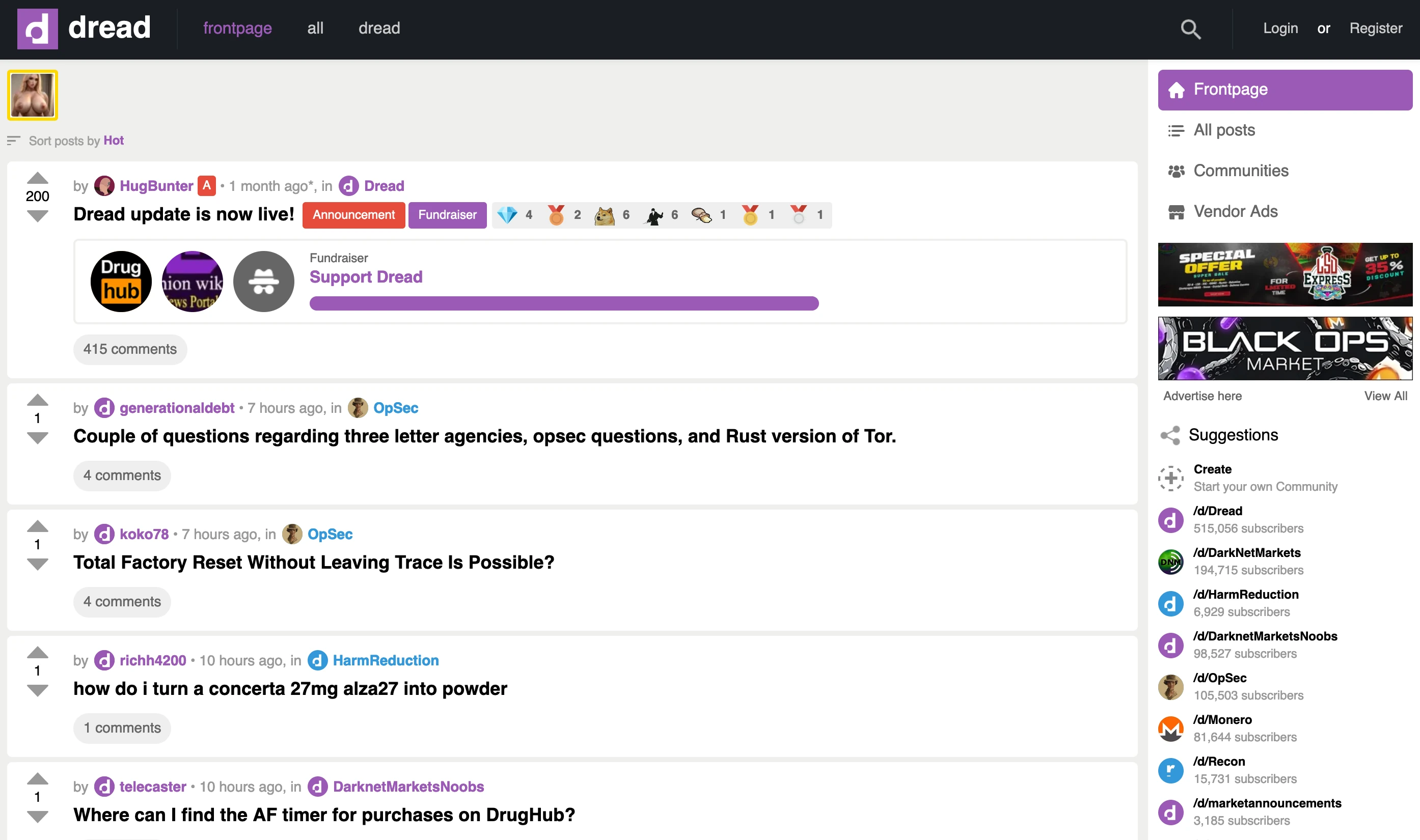
Vendors run support threads directly in their own subdreads, answering customer questions and gathering feedback in public. Market operators even rely on Dread’s development services, like its captcha and DDoS protection tools, to keep their own sites online.
It’s gone from discussion board to infrastructure. In a space that eats platforms alive, that’s almost unheard of.
Surviving the Crosshairs
Dread hasn’t had it easy. Like everything in the dark web space, it lives under constant threat — takedowns, law enforcement pressure, cyberattacks. In late 2022, it even went offline for a long stretch of “advanced maintenance,” sparking full-blown panic across the community.
But every time, Dread comes back stronger. Its developers are obsessive about security and resilience. It’s built not just to survive the chaos around it, but to outlast it.
What Comes Next
The dark web will keep evolving — markets will rise and fall, new privacy tech will surface, and users will keep chasing safer spaces. Dread seems ready to grow with it. More security tools, deeper market integration, new community features — none of it would be surprising.
What’s clear is that Dread isn’t going anywhere. It has become the anchor in a sea of instability, and the underground knows it.
The Bottom Line
Dread’s rise from a Reddit exile’s backup plan to the dominant dark net forum is a rare success story in a world built on impermanence. It has outlived rivals, outgrown its original purpose, and become the place where the dark web goes to talk, trade, and trust.
In a world of vanishing forums and disposable markets, Dread is the one thing that refuses to disappear.







0 Comments