

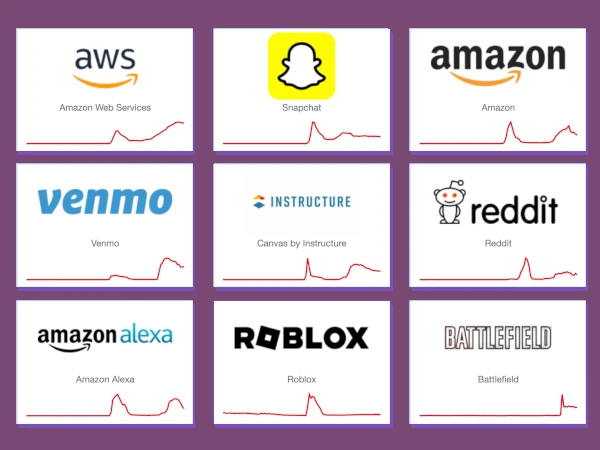
The recent AWS (Amazon Web Services) outage on Monday, which affected a wide range of critical online platforms, has underscored the risks inherent in the centralization of cloud services. From popular social media sites like Snapchat and Reddit to financial institutions such as Lloyds and Halifax, millions of users experienced disruption. While DNS errors are not unusual in the tech industry, the scale of this outage highlighted vulnerabilities tied to the reliance on a few dominant cloud providers. With AWS hosting a third of global internet traffic, the incident revealed how fragile the current system can be, especially when so much of the digital economy is dependent on a single provider.
The Risks of Centralized Cloud Infrastructure
AWS, alongside Microsoft Azure and Google Cloud, has become a dominant force in the cloud service market, controlling a large share of global infrastructure. However, this concentration of power presents significant risks. When one provider experiences a technical failure, the impact can be widespread, affecting not just one service but multiple platforms simultaneously. The AWS outage exemplifies the dangers of such a reliance, as businesses and governments have few alternatives at AWS’s scale. While the provider’s reliability is generally trusted, the recent disruption calls for greater diversification, particularly in regions like Europe, where reliance on U.S.-based services is under increasing scrutiny.
The Details of the AWS Outage
The outage that took down platforms like Facebook, Coinbase, and LaGuardia Airport check-in kiosks was caused by an internal issue within AWS's infrastructure. A subsystem monitoring network load balancers failed, creating a cascade of disruptions. Amazon confirmed there was no evidence of a cyberattack, but the event raised concerns about how a failure of this magnitude could impact critical infrastructure. Similar incidents in AWS’s Northern Virginia region in the past suggest a recurring vulnerability. Although the issue was resolved quickly, experts emphasized the need for businesses to adopt more robust failover strategies and avoid over-relying on a single provider for mission-critical services.
Implications of Centralized Cloud Services
While the AWS outage was not caused by a cyberattack, the event highlights the risks of centralizing critical infrastructure with a few major providers. In today’s world, where cybercrime is becoming more advanced, the vulnerability of cloud services is a pressing concern. A targeted cyberattack on AWS could cause widespread disruption, affecting millions of users who rely on cloud-based services. This is similar to the devastating 2009 incident in South Korea, where a fire destroyed government servers, leaving vital systems unrecoverable. The concentration of cloud power in a few companies means that a single successful attack could cripple entire sectors, underscoring the urgent need for more secure, decentralized infrastructure.
The Call for Diversification and Resilience
The AWS outage serves as a wake-up call to rethink the infrastructure model for the global digital economy. Over-reliance on a small number of cloud providers leaves businesses exposed to both technical failures and cyberattacks. To reduce these risks, experts recommend adopting multi-cloud or hybrid-cloud strategies. These approaches would spread workloads across multiple providers, mitigating the consequences of any single failure. Additionally, businesses should invest in robust failover systems that allow for quick transitions to backup services in the event of an outage. The incident has also increased interest in regional alternatives to U.S.-based cloud providers, particularly in Europe, where data sovereignty concerns are rising.
A Moment to Rethinking Cloud Infrastructure
The AWS outage has underscored the risks associated with the centralization of cloud infrastructure. While technical errors are inevitable, the far-reaching consequences of this event emphasize the vulnerability of relying on a single provider for critical services. The disruption has reignited concerns over the concentration of power in a few cloud giants and the potential for catastrophic disruptions caused by technical failures or cyberattacks. As the digital world becomes more interconnected, it is crucial to embrace diversified, resilient infrastructure models that prioritize redundancy and security. This will help mitigate the risks posed by over-reliance on a small number of dominant providers.





















0 Comments