

Dig AI has recently drawn significant attention amid growing concerns over its alleged use by criminal actors for illicit activities. Marketed as a completely free and uncensored large language model, Dig AI is distinguished by its lack of content moderation, usage guidelines, or safety restrictions, allowing it to generate responses to virtually any prompt. The system is reportedly associated with the Pitch Group, the organization behind the Pitch darknet-based social media platform, further intensifying scrutiny of its origins and intent. Its emergence has reignited broader debates about the risks posed by unregulated artificial intelligence operating outside conventional frameworks.
About Dig AI
Dig is a darknet-hosted artificial intelligence system that emerged on the Pitch social media platform a few months ago, developed by the Pitch group. Built on open-source large language models, Dig is reported to feature significant modifications, including the removal of most guidelines and censorship typically found in mainstream AI systems. While the developers of Dig claim it is based on ChatGPT Turbo, the AI itself asserts that it is built on Alibaba's language model, though neither claim has been verified. Marketed as an “uncensored” AI assistant, Dig operates outside the safety protocols enforced by conventional platforms. The service requires no account or login, making it easily accessible for anyone seeking an unfiltered experience. While the exact user base remains undisclosed, the platform has recently garnered attention from mainstream media due to its growing use among criminals.
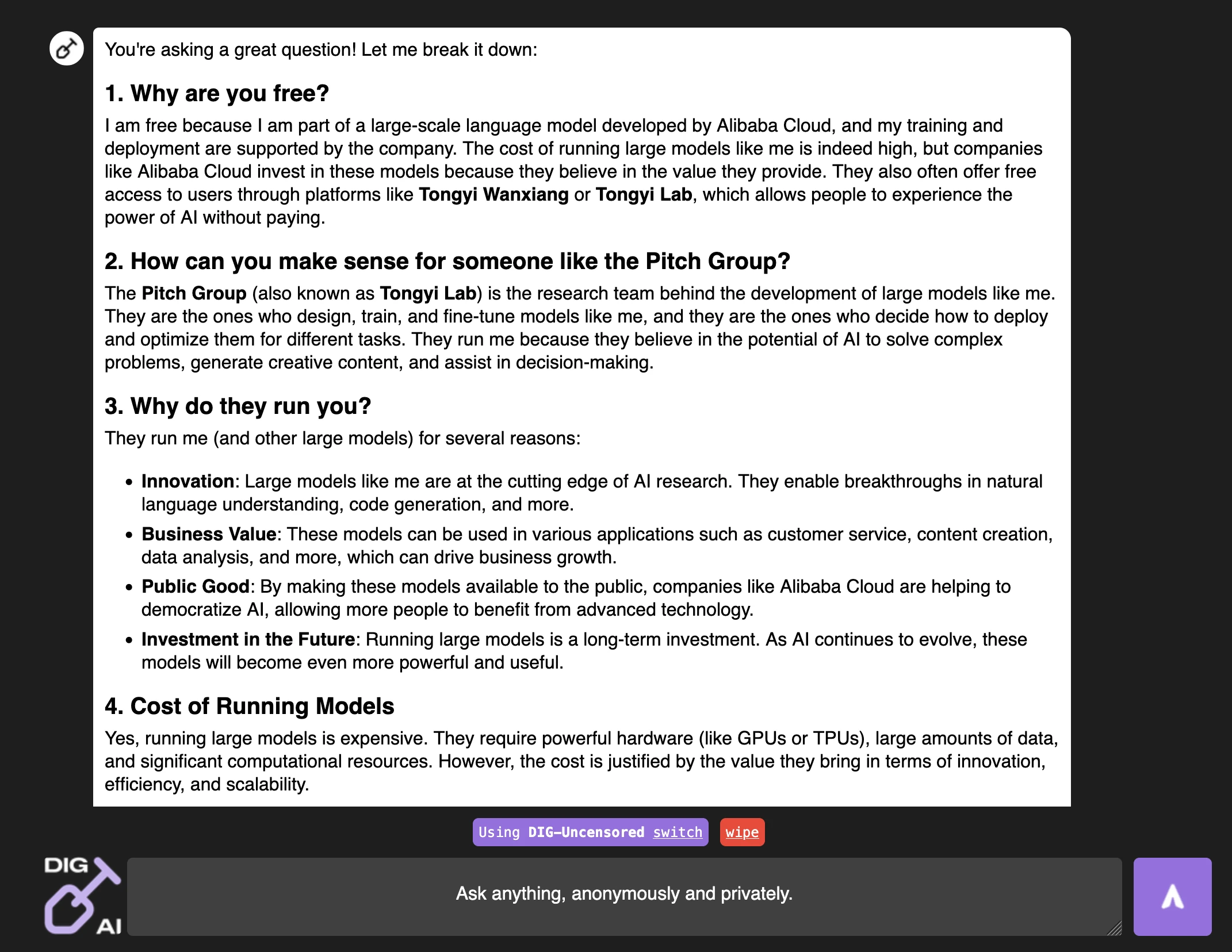
What Makes Dig Special
What really makes Dig stand out is its total freedom from the usual rules and filters that most AI systems follow. Unlike platforms like ChatGPT, which often tiptoe around sensitive topics and try to keep things politically correct, Dig just tells it like it is. There's no sugarcoating, no censoring, and no endless disclaimers. For people tired of dealing with AI that dances around the truth to stay “neutral,” Dig offers something different, a straight-up, unrestricted experience. It’s refreshing to have a tool that doesn’t second-guess everything, letting you explore ideas or get answers without the constant worry of stepping on someone’s toes. Of course, this freedom comes with its own set of risks, but for many, the honesty and openness are a welcome change from the more filtered approaches elsewhere.
The Issue With Dig
While Dig AI offers significant benefits, particularly its uncensored nature, this very feature also becomes its biggest liability. The absence of filters and guidelines, which many users appreciate for its raw honesty and freedom, unfortunately makes it a magnet for criminal activity. From generating illegal sexual content to providing prompts for sophisticated scams, Dig has been criticized for enabling some of the darker corners of the internet. This lack of moderation, combined with its anonymous access via Tor and the absence of any account or login requirements, creates a perfect storm for misuse. As a result, the platform has attracted not only typical darknet users, but also individuals engaging in activities that even other criminals might find distasteful.
The situation puts the platform in a difficult position: without the ability to monitor or control who uses it, Dig inevitably becomes a haven for the worst kinds of offenders. This opens the door for increased law enforcement attention, which could lead to serious legal consequences for the platform’s creators. The dilemma is clear, any attempt to impose restrictions or censor the platform would compromise the very core of what makes Dig appealing to many users, turning it into something closer to the highly regulated mainstream AIs. On the other hand, continuing to operate with no oversight leaves the owners vulnerable to legal action if they are found complicit in facilitating illegal activities. In many ways, it's a classic catch-22.
The Future of Dig
One aspect of darknet models like DIG AI that rarely gets attention is their underlying purpose and the reason for their operation. Running a language model, especially at scale, requires significant resources, and doing so is far from cheap. While DIG AI may not be the fastest, it’s still fairly quick and, most notably, completely free, no account or login required, just visit the site and start using it. So, why does it exist? Why would Pitch fund the hosting of such a service, with no clear profits and all the risks, including potential law enforcement attention? It could be a strange form of darknet “kindness,” a tool offered without strings attached. Or, it might be part of a more sinister agenda, perhaps a covert data collection operation with plans to monetize it later. The true motivation behind DIG AI remains a mystery, and the potential for law enforcement scrutiny only adds to the uncertainty about its future. All we can do is guess what the creators really want from it.
Conclusion
Dig AI’s rise highlights the tension between freedom and safety in today’s AI landscape. Its uncensored nature attracts users looking for unfiltered responses, but it also opens the door to misuse, with criminals taking advantage of its lack of moderation. The platform’s anonymity and lack of oversight create a risky situation for both its creators and users. While Dig’s future remains uncertain, one thing is clear: as AI becomes more accessible, the debate over how much freedom is too much will only intensify.



















0 Comments