

This week brought a startling breakthrough in one of the largest cyberattacks in recent history: Las Vegas authorities announced the arrest of a teenager linked to the September 2023 MGM Grand casino hack. The attack — carried out by two notorious hacking groups, Scattered Spider and BlackCat — caused massive disruption to MGM’s operations, resulted in stolen data worth millions, and exposed major vulnerabilities in the hospitality industry.
The MGM Grand Casino Hack: A Timeline
The cyberattack began in early September 2023, with reports surfacing around September 10–11. Investigators later revealed it was a coordinated effort involving Scattered Spider, a social engineering subgroup tied to ALPHV / BlackCat / UNC3944 — groups infamous for high-level ransomware campaigns targeting large organizations.
According to reports, the hackers gained access through a sophisticated social engineering scheme. They identified an MGM employee using publicly available information on platforms like LinkedIn, then impersonated that employee to call the company’s IT service desk. By convincing staff to reset passwords, they bypassed key protections. They also used a tactic known as “MFA fatigue” — repeatedly sending multi-factor authentication prompts until one was accepted — which gave them deeper access to MGM’s network.
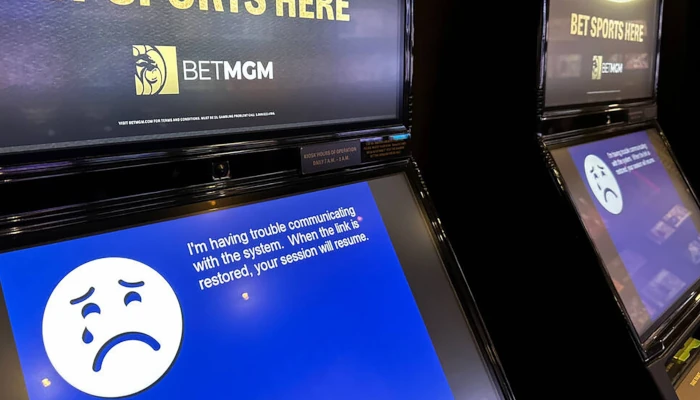
Once inside, the hackers stole roughly six terabytes of sensitive corporate data and deployed ransomware tools tied to BlackCat. Among the stolen assets was the proprietary algorithm behind MGM’s slot machines and payout systems — a breach that rattled the entire gaming industry. The attack disrupted both cloud and on-site systems, including email servers, corporate applications, reservation platforms, and internal tools. Guests faced disabled digital room keys, broken slot machines, and ATM outages, while employees struggled with locked systems and manual workarounds.
Financial and Operational Fallout
The breach caused severe operational disruption at MGM Grand and its affiliated properties. Restoring services took weeks of coordinated work between MGM, cybersecurity experts, and the FBI’s Las Vegas Cyber Task Force. Unlike Caesars Palace, which endured a similar attack days earlier and reportedly paid $15 million in ransom, MGM publicly refused ransom demands. That stance came at a high cost: estimates of MGM’s total losses range from tens of millions to over $100 million, factoring in lost revenue, remediation, and legal costs.
This contrast between Caesars and MGM highlights a growing debate in the industry: does paying ransom encourage cybercrime — or does refusing to pay risk even greater damage?
The Arrest of a Teenager
In a major twist, Las Vegas detectives, working with the FBI’s Cyber Task Force, identified a teenage boy as a suspect in several Las Vegas casino cyberattacks between August and October 2023. Authorities say he was directly involved in Scattered Spider’s role in the MGM Grand hack and may have been the voice on the phone who tricked MGM staff into granting access.
The unnamed minor voluntarily surrendered on September 17, 2025, to the Clark County Juvenile Detention Center. His arrest came just a day after two other teenagers in the United Kingdom were detained for alleged involvement in related Scattered Spider activities. He now faces serious charges, including obtaining and using personally identifiable information to impersonate others, extortion, conspiracy to commit extortion, and unlawful acts involving computers.
The Clark County District Attorney’s Office is seeking to transfer the case to the criminal division so he can be tried as an adult. While authorities have not disclosed his identity or the full extent of his involvement, reports suggest he is cooperating — potentially leading to further arrests.
Implications for Cybersecurity
The arrest raises unsettling questions about cybersecurity in high-value industries and the growing role of young individuals in complex cyberattacks. The fact that teenagers — driven by curiosity, peer influence, or financial motives — can carry out such high-impact operations exposes both generational and structural gaps in cyber defense.
The MGM Grand hack is now a case study in modern cybercrime, blending social engineering, ransomware deployment, and targeted exploitation of proprietary systems. It underscores the dangers of underestimating cyber threats and reinforces the need for robust employee training, vigilant system monitoring, and stronger multi-factor authentication resilience.
What’s Next?
As the investigation continues, the MGM Grand cyberattack and the arrest of a teenage suspect mark a pivotal moment in cybersecurity enforcement. This case could redefine how juvenile cyber offenders are prosecuted and spark deeper conversations about corporate responsibility in defending against social engineering.
As MGM works to recover and the legal process unfolds, the cybersecurity world is watching closely — aware this could be the start of a troubling trend: increasingly sophisticated cyberattacks driven by younger actors.




















0 Comments