

Google has announced that it will retire its dark web monitoring tool in early 2026, less than three years after its launch. The feature, designed to alert users when their personal information appeared on dark web forums or in leaked databases, will stop scanning for new breaches on January 15 and be fully discontinued on February 16, along with all stored monitoring data. Google cited user feedback indicating that while the tool raised awareness of data exposure, it did not provide clear guidance on actionable steps to protect accounts. As the company shifts its focus toward more proactive security tools, users are being encouraged to review their monitoring profiles and take additional measures to safeguard their personal information online.
What is Google Darknet Report?
The Google Dark Web Report was a security feature launched in March 2023 to help users monitor whether their personal information, such as names, email addresses, phone numbers, Social Security numbers, and other sensitive data, had appeared in breaches or databases circulating on the dark web. Users could create a monitoring profile by submitting this information, and the system would scan known darknet sources and leaked datasets to detect matches. When a match was found, the tool would notify the user, highlighting that their data had been exposed.
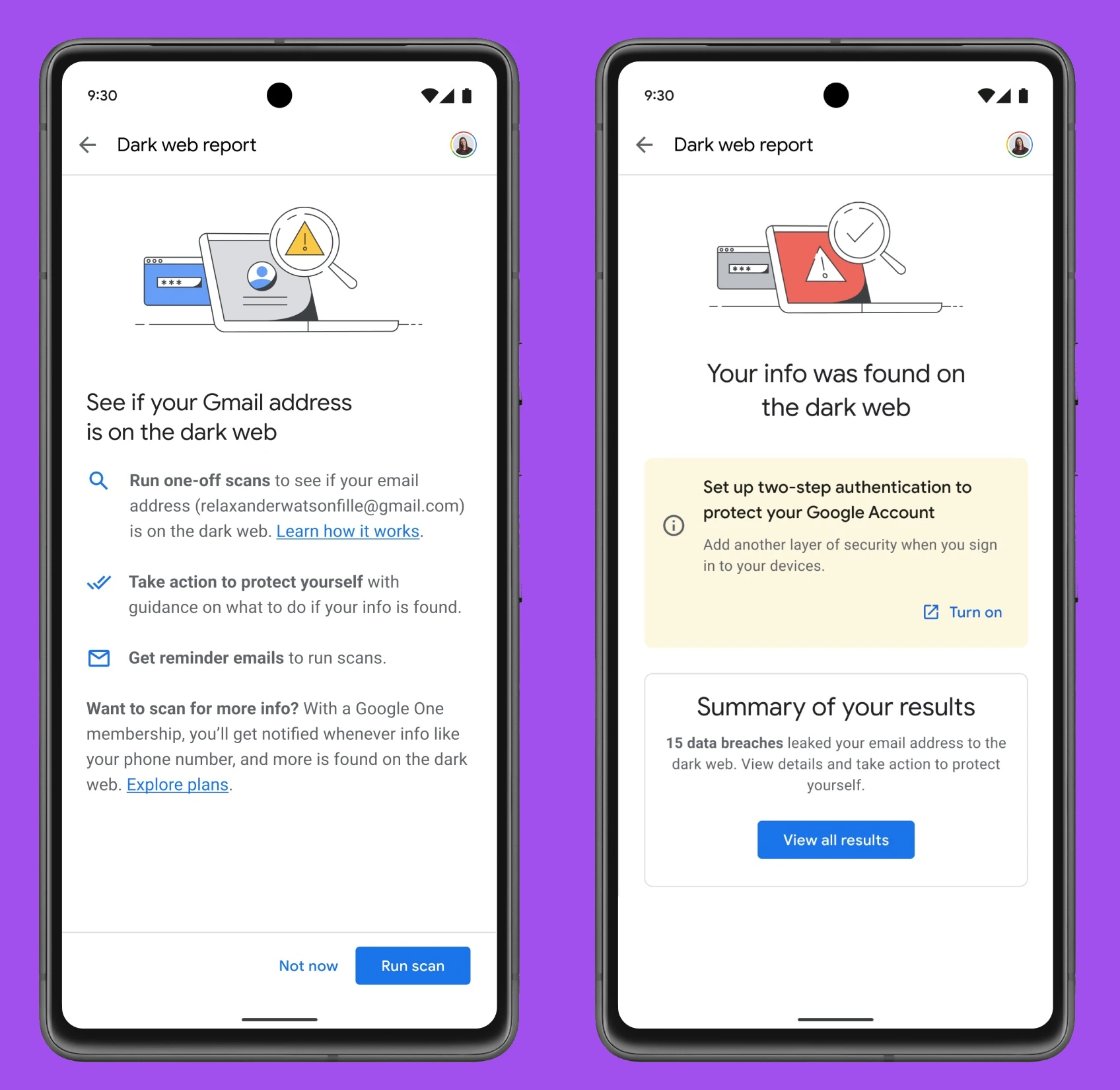
Originally exclusive to Google One subscribers, the feature was expanded in mid-2024 to all Google account holders. While the report did not have the capability to remove data from the dark web, it served as an early warning system, allowing users to take preventive actions such as updating passwords, enabling multi-factor authentication, and monitoring their accounts for suspicious activity. The tool essentially offered visibility into digital exposure, translating the abstract threat of the dark web into concrete alerts that users could act upon.
The End for Google's Darknet Reports
Google has said that its dark web monitoring tool will be fully discontinued in February 2026, less than three years after its initial launch. The company cited user feedback indicating that while the service provided alerts about exposed data, it did not offer clear or actionable guidance for protecting accounts. As a result, Google claims it's shifting its focus to security tools that provide more concrete steps, such as Password Manager, Security Checkup, and the Results About You feature, which allow users to actively secure their accounts and control the visibility of personal data online.
The discontinuation means that scans for new data exposures will stop on January 15, 2026, and all stored monitoring information will be deleted by February 16, 2026. Users who have relied on the tool will no longer receive alerts about potential breaches, so it is recommended that they review any saved results and take proactive measures to protect sensitive information. While the decision removes a visibility feature, it also emphasizes the importance of ongoing cybersecurity awareness, encouraging users to adopt tools and practices that prevent data misuse rather than simply being notified after exposure.
The Likely Reasons Behind the Shutdown
While Google frames the discontinuation of its dark web report as a response to user feedback about “lack of actionable next steps,” there are likely deeper factors at play. Maintaining a service that monitors sensitive personal data across the dark web is both technically complex and expensive. To detect breaches, the system must access data that is often obtained from leaked databases, forums, or threat intelligence feeds, some of which may involve purchasing or aggregating stolen information. Handling this kind of data carries significant legal, ethical, and privacy implications, as any misstep could expose Google to liability or reputational risk.
Additionally, the tool may have suffered from low user engagement, with relatively few users taking meaningful action based on alerts. When combined with the operational costs and potential risks of storing and scanning vast amounts of sensitive personal information, these factors could make the feature less appealing from a business perspective. In short, the official explanation about improving “actionable guidance” is likely only part of the story, with cost, liability, and complexity playing a critical role in the decision to retire the service.
Conclusion
Despite Google’s mixed reputation for handling user data, the dark web report was a useful and innovative tool that alerted users when their personal information appeared in breaches, turning abstract risks into actionable awareness. Its retirement in February 2026 is disappointing, as it removes a simple way to monitor exposure, but there are many alternatives, mostly paid, that offer similar monitoring, identity protection, and data removal services. While it’s sad to see the feature go, users can still take proactive steps to safeguard their information and stay aware of potential online threats.




















0 Comments