

The Takedown of Archetyp Market: A Comprehensive Overview
In June 2025, a landmark event in the world of cybersecurity and digital crime unfolded. Archetyp Market, one of the largest and most secure darknet marketplaces, was seized in a global law enforcement operation dubbed Operation Deep Sentinel. The takedown of this notorious platform marks the latest chapter in an ongoing struggle between authorities and the decentralized underground economy thriving on the dark web.
The Rise of Archetyp Market
Launched in May 2020, Archetyp Market quickly ascended to prominence, carving out a significant space in the competitive world of darknet marketplaces. Unlike other platforms that offered a range of illicit products, Archetyp exclusively facilitated the trade of illicit drugs. This niche approach allowed it to grow rapidly, reaching over 600,000 active users and listing more than 17,000 products by the time of its closure.
The market’s success can be attributed to a combination of factors: robust security measures, a user-friendly interface, and an efficient escrow system that ensured secure transactions between vendors and buyers. Users could purchase a variety of substances—ranging from MDMA and cocaine to fentanyl and synthetic opioids—using the privacy-focused cryptocurrency Monero, which added an extra layer of anonymity to the transactions.
At its peak, Archetyp processed an estimated €250 million in transactions, establishing itself as the largest darknet marketplace by volume and reputation. Its platform mirrored mainstream e-commerce in terms of product listings, reviews, and even search filters, making it easier for users to navigate and shop.
Operation Deep Sentinel: A Global Collaboration
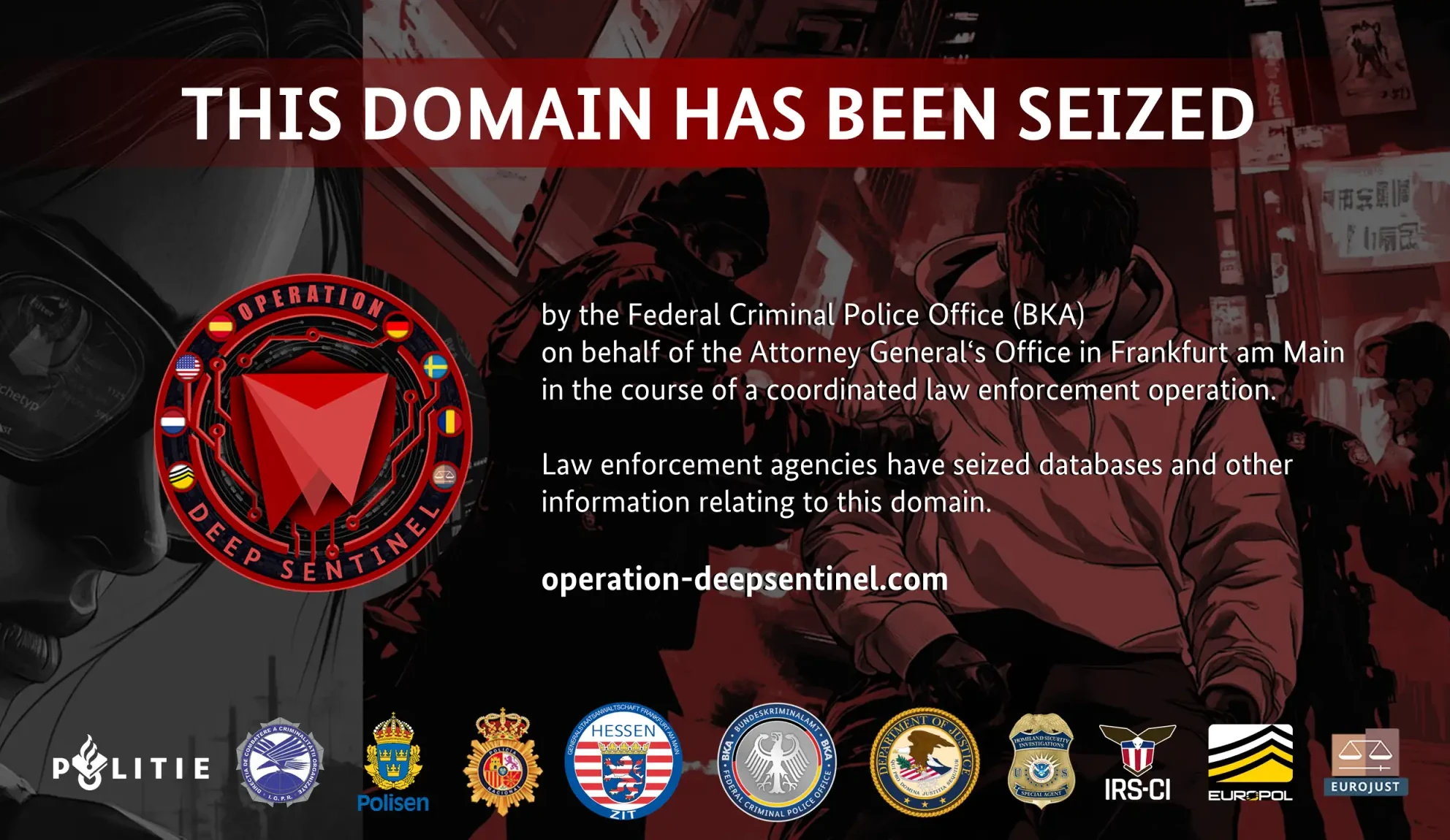
The takedown of Archetyp Market didn’t happen overnight. It was the culmination of a highly coordinated international effort spearheaded by authorities across multiple countries. Participating agencies included Europol, Eurojust, and law enforcement agencies from Germany, the Netherlands, Romania, Spain, Sweden, and the United States. Around 300 officers were involved in the operation, focusing not only on the physical infrastructure of the marketplace but also its digital footprint.
The operation’s scale underscored the commitment of law enforcement agencies to disrupt illicit online economies, sending a strong message that darknet criminal activities are under constant scrutiny.
Key Arrests and Seizures
In June 2025, Marc Hegemeister, the 30-year-old founder and administrator of Archetyp Market, was arrested in Barcelona, Spain. Along with him, one moderator and six top vendors were also apprehended, highlighting the operation’s effectiveness in dismantling key players within the platform’s ecosystem.
Additionally, €7.8 million in assets were seized during the operation, including both physical goods and digital assets stored on the servers. The server infrastructure itself, hosted in the Netherlands, was taken offline, rendering Archetyp defunct and effectively cutting off the marketplace from its user base.
The takedown was accompanied by a seizure banner on both the onion and clearnet sites of Archetyp, which linked users to a dedicated website, operation-deepsentinel.com, providing information about the operation and a video message aimed at the underground economy.
The Dark Web's Resilience
Despite the publicity surrounding Archetyp’s seizure, experts are quick to point out that the long-term impact of this operation may be limited. The dark web operates in an ecosystem where marketplace takedowns are almost routine. Historically, when platforms like Silk Road, AlphaBay, or WallStreet have been shut down, new markets quickly emerged to fill the void. This adaptability is one of the core traits of the dark web’s community.
Users, often well-versed in the risks of operating in this space, are quick to migrate to new platforms, sometimes even retaining the same pseudonyms and transactions. Established vendors from closed marketplaces typically find their way to new ones, often with incentives or lower fees to facilitate their transition. The infrastructure for these migrations is well-established within dark web communities, making the takedown of one marketplace merely a temporary disruption.
Moreover, the community’s resilience is further reinforced by the development of underground resources, such as tutorials and forums, where members share knowledge on how to navigate law enforcement crackdowns, security issues, and platform maintenance.
The Broader Context: Limitations of Dark Web Policing
While Operation Deep Sentinel was a significant law enforcement success, it illustrates a recurring issue with the broader approach to combating online criminal activities. Dark web marketplaces, though undeniably hubs for illegal activity, are just one part of a much larger digital landscape. The dark web drug trade, for instance, is simply a component of the wider illicit trade that takes place on social media, forums, and even mainstream websites.
In fact, as law enforcement continues to target dark web platforms, digital harms in other areas are expanding. From cryptocurrency scams like pump-and-dump schemes to the use of generative AI for malicious purposes (such as creating deepfakes), the growing risks in the digital space are multifaceted. Focusing solely on dark web marketplaces might be a case of law enforcement playing a game of whack-a-mole, where the temporary takedown of one market only leads to the creation of another.
Additionally, the shift of illicit activities to the surface web is becoming a significant concern. Platforms like Telegram, Discord, and other encrypted messaging services are increasingly being used for illegal trades, with more direct access to a global audience.
The Future of Dark Web Policing
While the law enforcement celebrates the success of Operation Deep Sentinel in the ongoing battle against digital criminal networks, it raises questions about the sustainability of current policing strategies. As law enforcement agencies continue to invest in these operations, it remains to be seen whether they can effectively disrupt the dark web’s criminal ecosystem for the long term.
Many experts argue that the focus should shift toward addressing digital harms beyond the dark web, particularly in mainstream platforms. Whether it’s tackling cryptocurrency fraud, combating the spread of illegal content on social media, or using AI to detect and prevent online criminal activities, there is a pressing need to adapt to the evolving digital landscape.
The world of the dark web will likely continue to evolve, with new platforms emerging, more vendors entering the market, and the underground economy finding ways to navigate law enforcement crackdowns. But the larger question remains: Can law enforcement truly keep pace with the evolving threats of the digital age?
Conclusion
The takedown of Archetyp Market is another example of the ongoing battle between law enforcement and the underground economy of the dark web. While the operation was a notable success, its long-term impact on the drug trade and other illicit activities remains uncertain. As authorities continue their efforts to dismantle these networks, they may need to reconsider their approach, broadening their focus to address the increasing risks and challenges of the larger digital ecosystem.
For now, however, Archetyp’s closure serves as a reminder that, even in the digital age, no marketplace—no matter how secure or encrypted—is safe from the reach of international law enforcement.



















0 Comments