


The hacking group ShinyHunters has once again made headlines, claiming responsibility for breaching nine prominent organizations and threatening to release sensitive data unless their ransom demands are met. This latest wave of cyberattacks has exposed millions of records, including personally identifiable information (PII) and internal corporate data from well-known brands such as Zara, 7-Eleven, and Carnival Corporation. As the group continues its extortion efforts, the victims are left grappling with the consequences of these breaches.
Recent Data Breaches and Ransom Demands
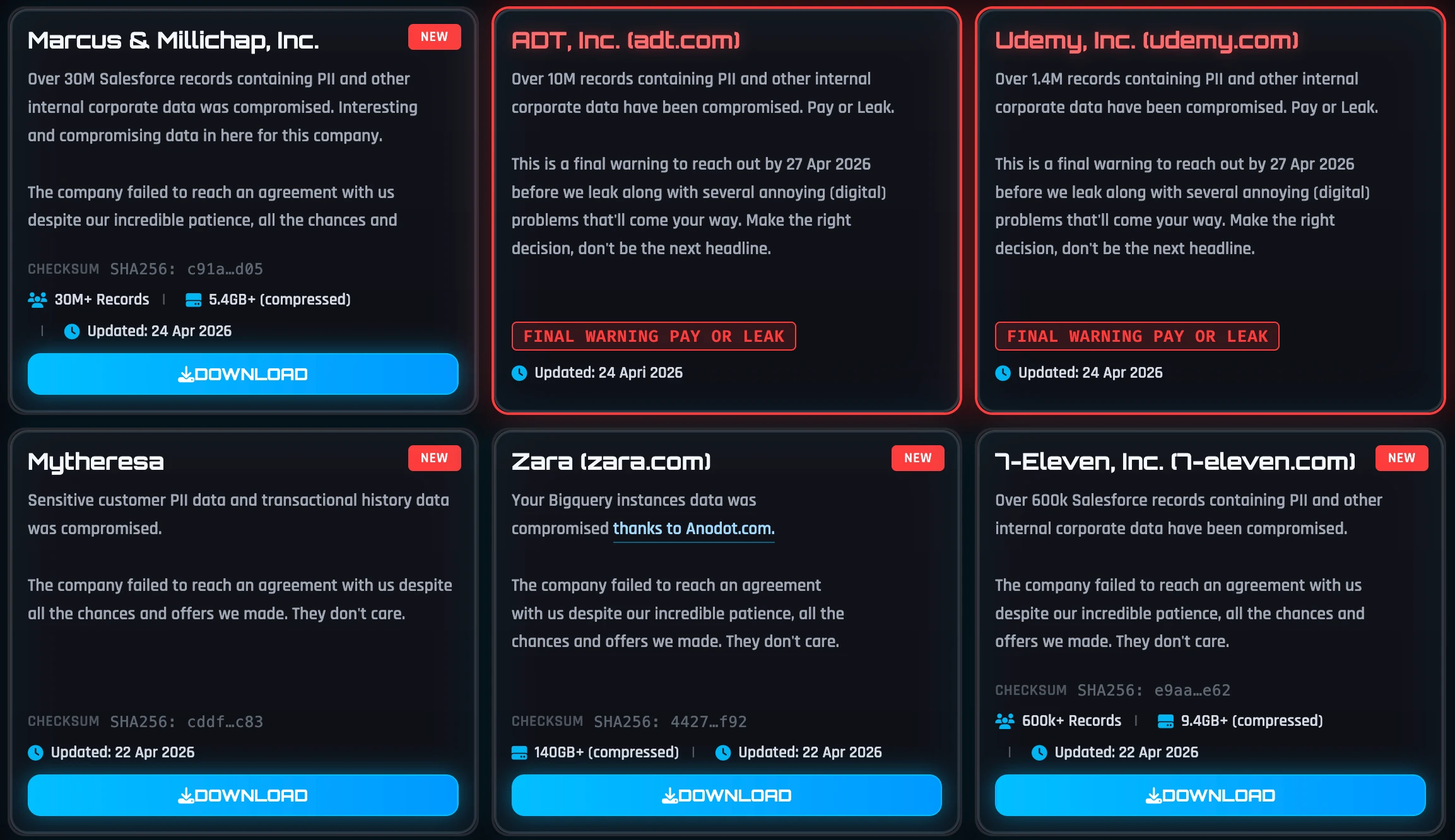
ShinyHunters’ most recent targets include fast fashion giant Zara, convenience store chain 7-Eleven, and the cruise line operator Carnival Corporation. The group has made it clear that if its ransom demands are not satisfied by April 21, it will release over 9 million records, exposing sensitive information related to customers and internal company operations.
The data breaches appear to be part of a larger campaign, with ShinyHunters leveraging vulnerabilities in widely used platforms. Zara, for instance, allegedly had its BigQuery instances compromised after the hack of Israeli AI analytics firm Anodot, which had previously been linked to other high-profile breaches, such as that of Rockstar Games. Similarly, 7-Eleven’s systems were reportedly compromised through a breach of its Salesforce environment. The stolen data from these two companies alone includes millions of sensitive records.
Other Companies Impacted by ShinyHunters
In addition to Zara and 7-Eleven, other well-known companies have also found themselves on the receiving end of ShinyHunters' attacks. Pitney Bowes, Canada Life Assurance Company, Aman Resorts, and Marcus & Millichap were all exposed as part of the group's Salesforce-focused infiltration campaign. These companies join the growing list of organizations suffering data theft, with some of the breaches involving millions of compromised records. Carnival Corporation, another high-profile victim, had over 8.7 million records stolen, including customer PII and internal data. This breach underscores the group’s ability to target a wide range of industries, from e-commerce and finance to hospitality and entertainment.
The Extortion Game
ShinyHunters’ modus operandi has remained consistent: demand a ransom in exchange for withholding stolen data. The group has threatened to release the compromised records if the victims fail to meet their financial demands by a specified deadline. In this latest wave of attacks, ShinyHunters set an April 21 deadline for Zara, 7-Eleven, and Carnival Corporation to comply with its demands or risk the public exposure of their stolen data.
This pattern is not new for ShinyHunters, which has been active since at least 2020. The group has built a reputation for extorting large sums from its victims in exchange for keeping stolen data private. While the group’s methods and tactics have drawn widespread attention, many of its targets continue to negotiate in the shadows, unwilling to publicly acknowledge the extent of the breaches until it is too late.
Impact on Victims
The aftermath of a breach like the ones orchestrated by ShinyHunters can be far-reaching. The stolen data, which includes sensitive PII, transaction histories, and internal corporate records, poses significant risks to both individuals and organizations. Not only are victims at risk of financial loss and reputational damage, but they also face the long-term consequences of potentially having their data sold or exploited in the underground economy.
For companies like Zara and 7-Eleven, the breach is more than just a financial setback; it is a blow to customer trust. When personal data is exposed, especially from such high-profile brands, the impact on public perception can be severe. These companies must now navigate the delicate balance of managing the fallout while also protecting their customers and securing their systems against further attacks.
Conclusion
ShinyHunters continues to make waves in the world of cybercrime with its latest string of data breaches. As the group threatens to release millions of records from some of the world’s most recognized brands, companies are left with difficult decisions to make. Whether they will give in to the extortion demands or risk the public exposure of their stolen data remains to be seen. What is clear, however, is that the group’s ability to infiltrate major corporations using common vulnerabilities is a growing concern for cybersecurity professionals worldwide. As ShinyHunters’ activities unfold, it serves as a stark reminder of the ever-present dangers lurking in the digital landscape.
























No comments yet — be the first.
Join the conversation
Log in to leave a comment